MiniMax M3.1 Flash is out, and the price is hard to ignore: $0.15 per million input tokens, $0.60 per million output tokens and $0.015 for cached input. There is already a free version on OpenCode, so trying it does not have to involve paying for the API. 1 4
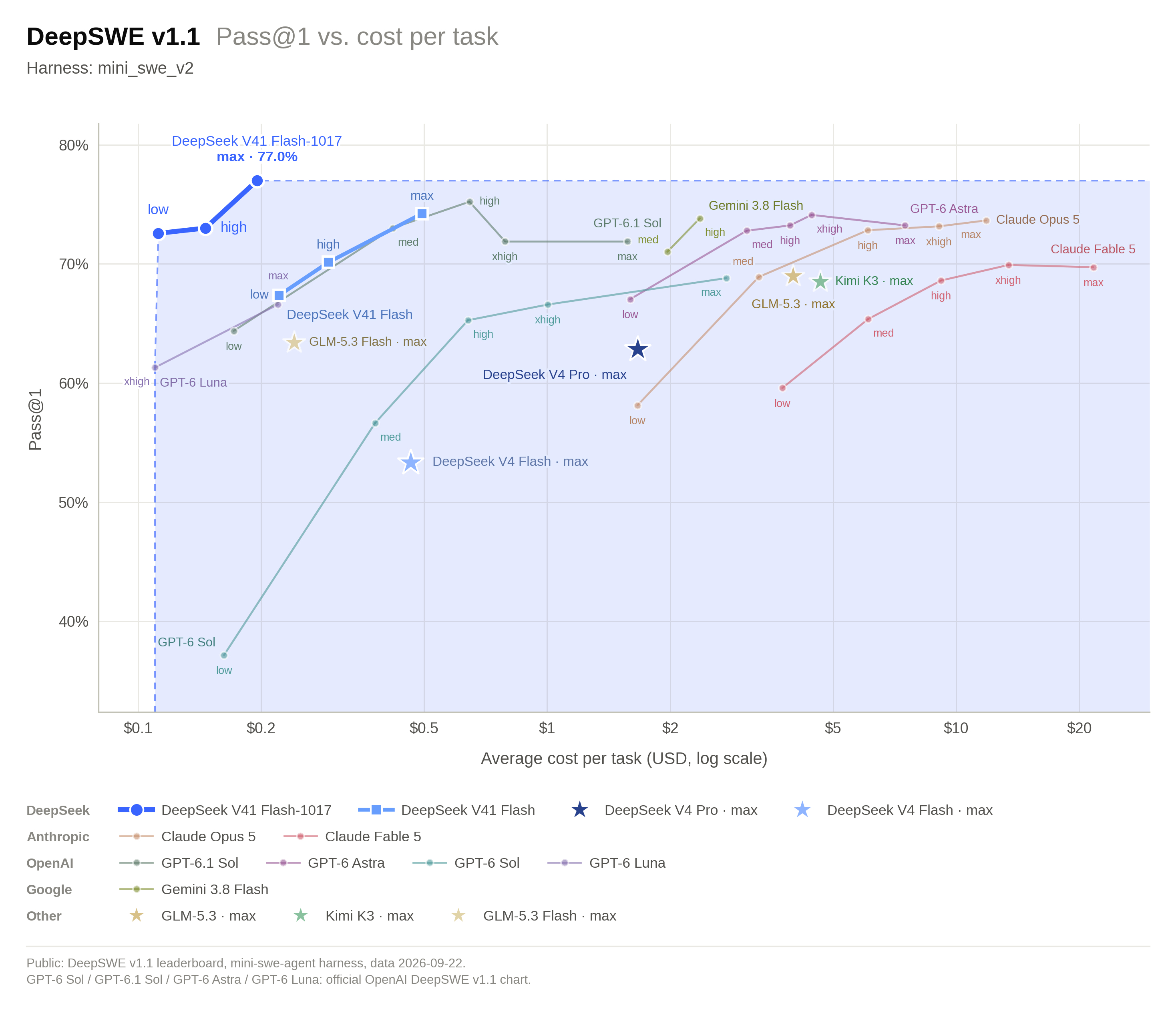
We shared the benchmarks earlier today, and our first impression was that this looks good for a Flash model. The obvious comparison is DeepSeek V4.1 Flash 1017: MiniMax’s table puts M3.1 Flash at 73.7 on DeepSWE v1.1, against DeepSeek’s 77.0. On Automation-Bench v1.0.6, MiniMax scores 62.2, ahead of DeepSeek’s 60.5. It is a close race on those two tests, with each model ahead on one. 2
The other results include 76.2 on BankerToolBench and 61.7 on OSWorld 2.0. MiniMax is aiming this release at agents that work through several steps, whether that means editing a repository, using business software or operating a computer. The benchmarks make it worth a closer look, especially at these prices.
Cheap through the API, free to try elsewhere
At the standard API rates, a million input tokens plus a million output tokens would cost $0.75, before any cached-input discount. For a coding agent making repeated calls and working through long outputs, that leaves quite a bit of room to experiment. 3
OpenCode lists minimax-m3.1-flash-free, with free input and output. Its documentation says the offer is for a limited time. Our provider discovery picked it up there as well. 4
We also spotted a Vercel listing showing $0 input and output rates, as the capture above shows. Vercel’s current public model page says pricing varies by provider and usage, so check the selected route before assuming every call is free. It also offers eligible free users $5 of Gateway credits every 30 days. 5
MiniMax says the model previously ran anonymously as Space Bunny. It is now available through the MiniMax API, M Plan and MiniMax Code. The weights will come later, and a Pro version is also planned. For now, Flash is the release you can actually try.
Sources & references
- MiniMax: M3.1 Flash launch announcement ↗
19 October 2026. Release, benchmark table and charts, paid API pricing and plans for weights and Pro.
- Lumina: M3.1 Flash benchmark findings ↗
19 October 2026. Lumina’s initial reaction to the launch comparison.
- Lumina: M3.1 Flash pricing ↗
19 October 2026. Input, output and cached-input rates, checked against MiniMax’s announcement.
- OpenCode: model endpoints, pricing and free models ↗
Read on 19 October 2026. Lists MiniMax M3.1 Flash Free and describes its free access as limited-time.
- Vercel AI Gateway: MiniMax M3.1 Flash ↗
Read on 19 October 2026. Confirms the model listing; current page says pricing varies by provider and usage and describes free Gateway credits.