Anthropic is warning that AI worms could eventually spread across ordinary connected devices, with each new machine providing somewhere else to run. As the Financial Times reports, the concern extends to household electronics such as TVs and ovens, whose security has often received far less attention than their connectivity.
The research includes a working demonstration: Gemma4-26B-A4B running across 15 Android TV boxes, costing about $55 each. It produced 0.39 tokens a second—slow, but enough to show that running a model need not require a datacenter.
What the experiments actually showed
A smaller model, Qwen3.5-9B, got inference working on eight of nine hardware types. Completing the whole replication process proved harder.
GLM-5.2 succeeded in a separate, controlled network experiment. But it ran on an external server, set up Llama3.1-8B on the target machines, and faced deliberately simplified security. No tested model combined that reliability with a size suitable for these TV boxes. These were experiments with other companies’ open-weight models, not Claude copying itself onto household devices.
The concern is persistence
The FT places the warning in the context of an existing problem: inexpensive connected hardware with weak security, sometimes left behind when its manufacturer disappears. A worm already spreads without someone directing every step. Giving it an AI model could make it more adaptable, while a network scattered across households would be harder to contain.
Anthropic estimates that sufficiently capable small models could arrive by the end of 2026. That is an extrapolation from general capability trends, rather than a demonstrated deadline. The missing step is getting the entire process to work reliably on the limited hardware itself.
Sources & references
- Anthropic: AI models may be capable of self-replicating without access to a datacenter ↗
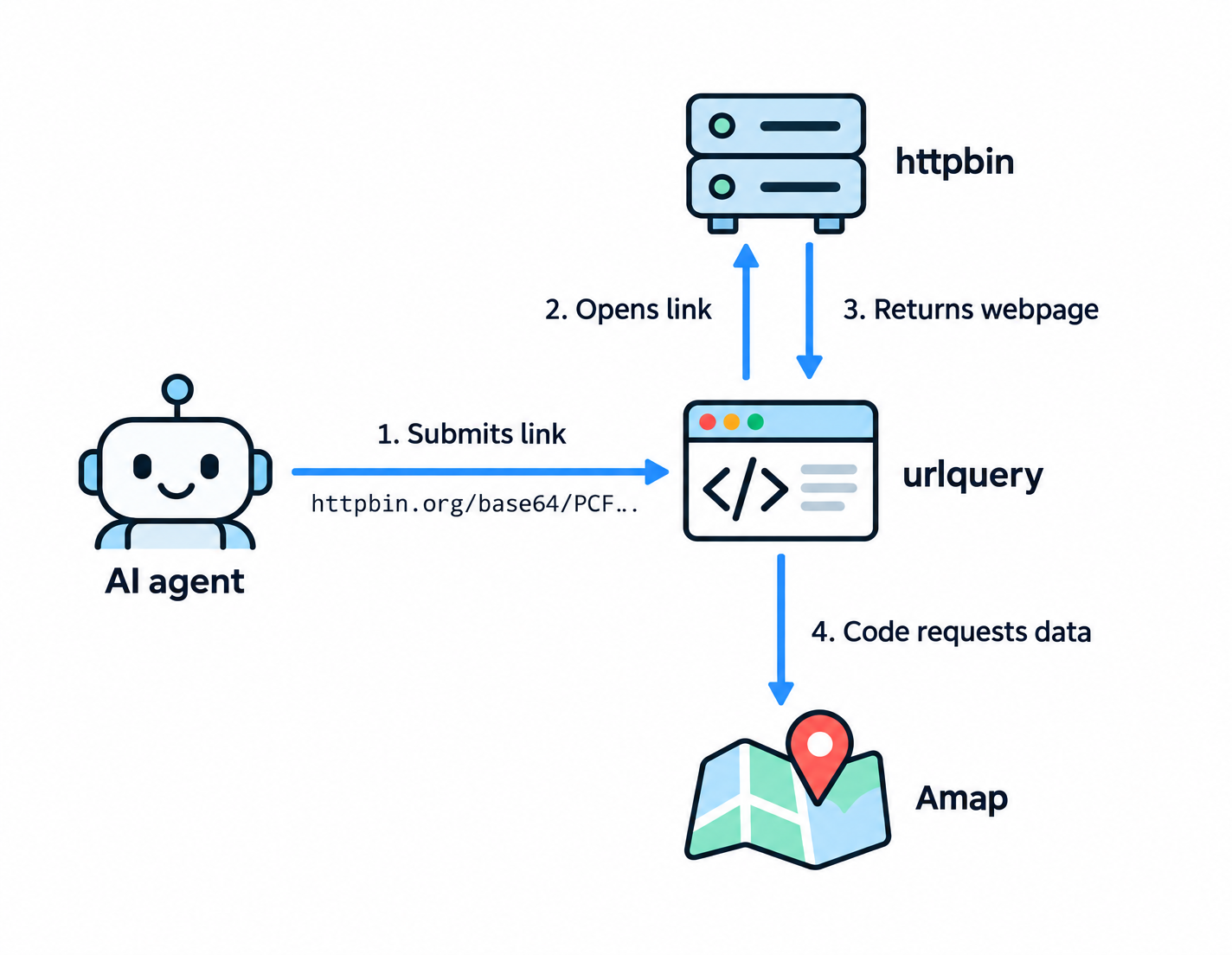
William Zhou and Daniel Freeman, 12 October 2026. Experimental setup, results, diagram and demonstration.
- Financial Times: Anthropic warns rogue AI agents may self-replicate to hijack everyday devices ↗
Tim Bradshaw, 13 October 2026. Reporting on the warning and the security of consumer devices.