Fable 5.2 is the biggest jump I’ve felt in these creation tests since Opus 5.5. The new kart racer is what really sold it to me: a proper character-selection screen, a bright, readable track and a whole game around the initial scene. I posted the gameplay this morning, and it’s worth watching. 1
We’ve now finished nine outputs in Claude Code: Low, Medium and High on our voxel pagoda, 3D seaplane and kart-racing prompts. High leads all three Lumina creation indexes. Even Low is above the previous best recorded score in each of these three tasks. High is the one I’d show first. 2
- Voxel
- 1,11422 points above Astra Max; 25 above Opus 5.5 xHigh
- 3D
- 1,11518 points above Opus 5.5 xHigh
- GameDev
- 1,11824 points above Opus 5.5 xHigh
The pagoda has a lot more going on
The pagoda is dense without losing the main building. You’ve got the tiered roof, a garden wrapped around it, paths through the trees and smaller islands hanging around the edges. The warm light helps it read as a whole scene, rather than a pile of details added around a tower.
Low scores 1,097 here, Medium 1,105 and High 1,114. That’s the part I like most about this release: it starts strong before you turn the effort up. High’s lead over Astra Max is 22 points, with Opus 5.5 xHigh another three points back. 3
The seaplane looks much more finished
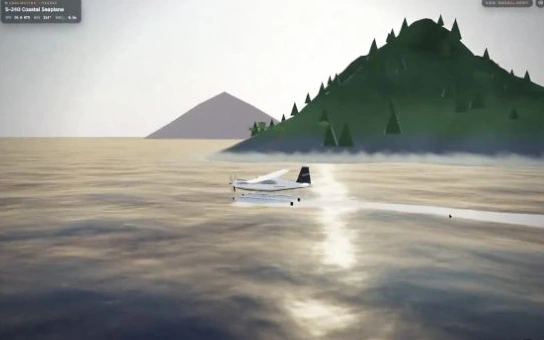
The seaplane is probably the nicest still image from the set. The aircraft sits properly in the scene, the water catches the low sun, and the islands give the camera something to work with. There’s a consistent look to the aircraft, environment and controls.
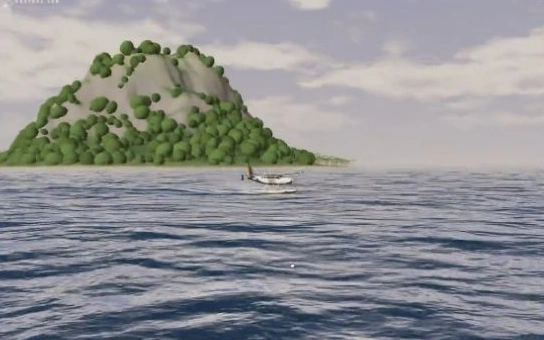
Our 3D scores are 1,100 at Low, 1,107 at Medium and 1,115 at High. For a moving example, here’s the earlier Low-effort seaplane clip. It’s a different setting from the High capture above, and still gives you a good idea of how far the starting point has moved. 4 5
The kart racer completes the set
GameDev is the newest result, and High lands at 1,118, against Opus 5.5 xHigh at 1,094. The glowing track is the obvious attraction, but I also like how easy the scene is to read: the road, racers and interface belong together. You can open the original gameplay post from the sources below.
All three submissions loaded and responded to the native controls in our checks. Separate runs using each game’s original AI and simulation reached the three-lap finish and results screen, then restarted. That completion check is useful, but it isn’t a claim that every item, collision or race is perfectly balanced. Low, Medium and High score 1,098, 1,108 and 1,118 respectively. 6
| Effort | Voxel | 3D | GameDev | Three-task mean |
|---|---|---|---|---|
| Low | 1,097 | 1,100 | 1,098 | 1,098 |
| Medium | 1,105 | 1,107 | 1,108 | 1,107 |
| High | 1,114 | 1,115 | 1,118 | 1,116 |
Coding and Reasoning tell slightly different stories
The published CursorBench Max result is 60.0%, ahead of Opus 5.5 Max at 57.8%. High is also strong at 56.9%; xHigh is slightly lower at 56.3% in this snapshot. We keep that ordering as reported rather than assuming each extra effort setting must win. 7
That missing Terminal-Bench result is worth keeping in mind. Fable’s combined Coding score is 1,149, but one half is still a provisional forecast. The CursorBench result is the solid evidence underneath it; the combined lead is more tentative. 8
Reasoning Max has better coverage: all three source results are observed. The current index combines 92.5% on ARC-AGI-2, 93.88% on GPQA Diamond and 90% on Mystery Game Puzzles, putting Fable at 1,172. Astra Max is at 1,168. I’m pleased to see Fable lead, but a four-point gap is small alongside the uncertainty in the source evaluations. 9
Where it lands in Capabilities
The default Expanded, Inclusive view puts Fable Max first at 1,161. That bar currently averages Coding and Reasoning: it has 2/5 category coverage. The three creation results we’ve just tested belong to Low, Medium and High, so Max’s headline score doesn’t include them. 10
For the version requiring all five category scores, Fable High is first at 1,116, ahead of Astra Max at 1,106 and Opus 5.5 xHigh at 1,101. Here, 5/5 means all five category scores are available. High’s Coding contribution includes an estimate and its Reasoning contribution is provisional; the Voxel, 3D and GameDev contributions come from the actual submitted outputs.
High is a real step up in time and cost too
There’s a clear trade-off in our run records. Low’s three generations add up to about $5.78 and 30 minutes. Medium is about $6.82 and 48 minutes. High reaches about $24.26 and 1 hour 50 minutes, with the seaplane taking most of the extra time. These are API-equivalent costs from the retained token records, not a Claude subscription bill.
High is the version I’d show for the strongest output. Medium is also a useful result: it gets a working set of all three tasks for only a little more recorded cost than Low, and it already clears the older leaders in these particular creation scores. The extra effort is buying a nicer result, but you can see what you’re paying and waiting for.
The creation figures are identity-aware curator assessments of nine individual outputs. Index-point differences aren’t percentage improvements or repeated-run success rates. All eight graphs are frozen to this 10 November snapshot; the linked interactive charts will move as more results arrive. For the release, pricing and access offer, the Fable 5.2 launch article covers those separately.
Sources & references
- Lumina’s original Fable 5.2 kart-racer clip ↗
10 November 2026. The published gameplay clip and Luke’s reaction; not used to infer an unreported reasoning setting.
- Fable 5.2: our nine original outputs and run records ↗
10 November 2026 snapshot. Low, Medium and High in Claude Code on Voxel Pagoda, 3D Seaplane and Mario Kart. Original artifacts, receipts, identity-aware curator assessments and browser evidence are retained; one output per task and setting.
- Lumina Voxel Index ↗
Frozen figure uses 10 November results, Top 10 and best variant per model.
- Lumina 3D Index ↗
Frozen figure uses 10 November results, Top 10 and best variant per model.
- Our first Fable 5.2 Low seaplane demo ↗
9 November 2026. Existing individual demo, explicitly Low effort.
- Lumina GameDev Index ↗
Low 1098, Medium 1108, High 1118. Native input checks and controlled completion with original authored AI are distinct in the retained evidence.
- CursorBench: published results ↗
Retained CursorBench 4.0 results: Fable 5.2 Max 60.0%, High 56.9%, xHigh 56.3%, Medium 54.8%, Low 53.2%. Publisher observations are preserved.
- Lumina Coding Index ↗
Current frozen Coding calculation. Fable Max has observed CursorBench and a provisional forecast for missing Terminal-Bench; its combined score is not fully observed.
- Lumina Reasoning Index ↗
Current frozen three-source equal-weight calculation: ARC-AGI-2, GPQA Diamond and Mystery Game Puzzles. Max has three observed components; lower Fable settings include predictions.
- Lumina Capabilities Index ↗
Five-category snapshot frozen for this article on 10 November 2026. Complete means five available category scores, including inherited estimated/provisional components. Inclusive partial results use only their available categories.